

Tactical Harz
6B26 Steel Helmet Replica – Russian VDV / Airborne Troops Helmet
6B26 Steel Helmet Replica – Russian VDV / Airborne Troops Helmet
Couldn't load pickup availability
Due to high demand, delivery time is currently 6-10 working days.
Faithful replica of the Russian 6B26 steel helmet without ballistic properties – suitable for reenactment of modern Russian units, LARP, training, film props or collectors .
This replica represents the early modern standard helmet as worn particularly by Russian airborne troops (VDV), motorized infantry units and specialized units .
Equipment:
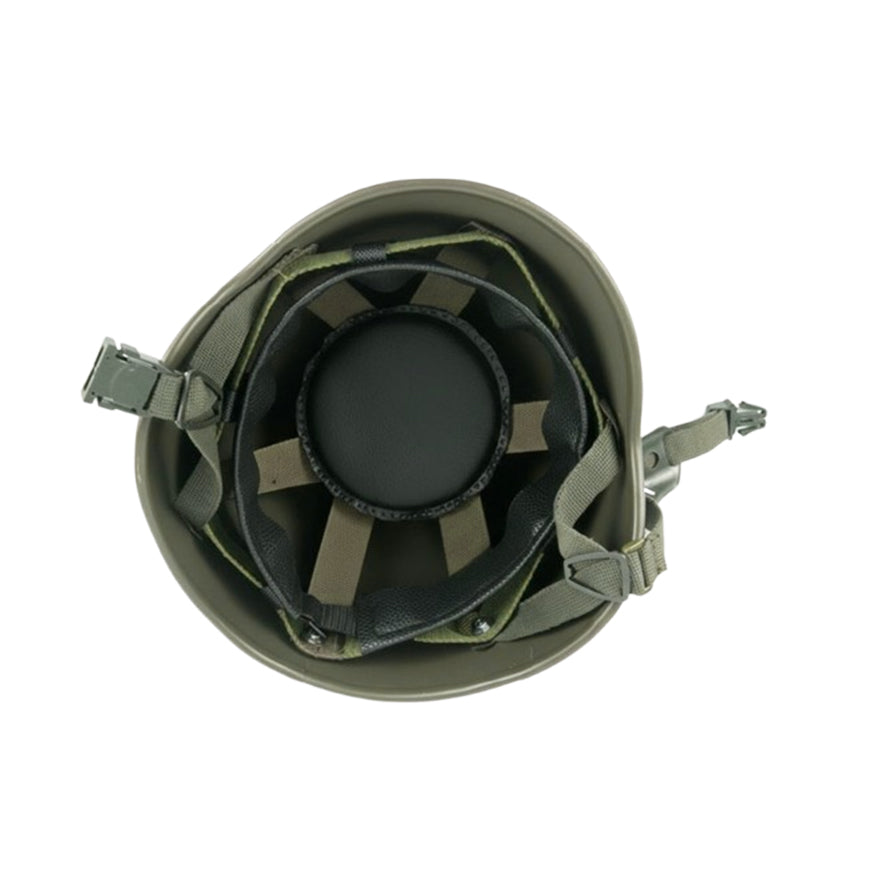
– 2 mm thick steel helmet shell with granulated coating
– Optimized surface to reduce heat transfer and wear
– Realistic weight of approximately 1.1 kg
– Inner padding made of cotton and PU leather for a stable fit
– Adjustable internal suspension for head sizes approx. 57–61 cm
– Form and silhouette historically accurate for VDV and early Ratnik representations
– Ideal for modern reenactment (2000s–early 2010s), airsoft representation and training scenarios
Technical data:
-
Weight: approx. 1.1 kg
-
Head circumference: approx. 57–61 cm
-
Material: Steel (helmet shell), PU leather & cotton (inner padding)
-
Color: Steel / neutral (without cover)
-
Package includes: 1× 6B26 steel helmet replica (helmet only, no accessories)
A notice:
This replica offers no ballistic protection and is not approved as a protective helmet. It is intended solely for display, reenactment, LARP, airsoft, and collector purposes .
Historical Background – 6B26
The 6B26 was introduced in the early 2000s as a modern steel helmet for the Russian armed forces and represents a transitional solution between classic steel helmets and later composite helmets of the Ratnik program .
It was primarily worn by airborne troops , motorized infantry units, and support forces. Its relatively low weight and simple design offered a practical balance between protection, comfort, and production costs. In practice, the 6B26 was frequently seen with EMR (Digital Flora) coverings , but was also worn bare – particularly during training and early deployments.